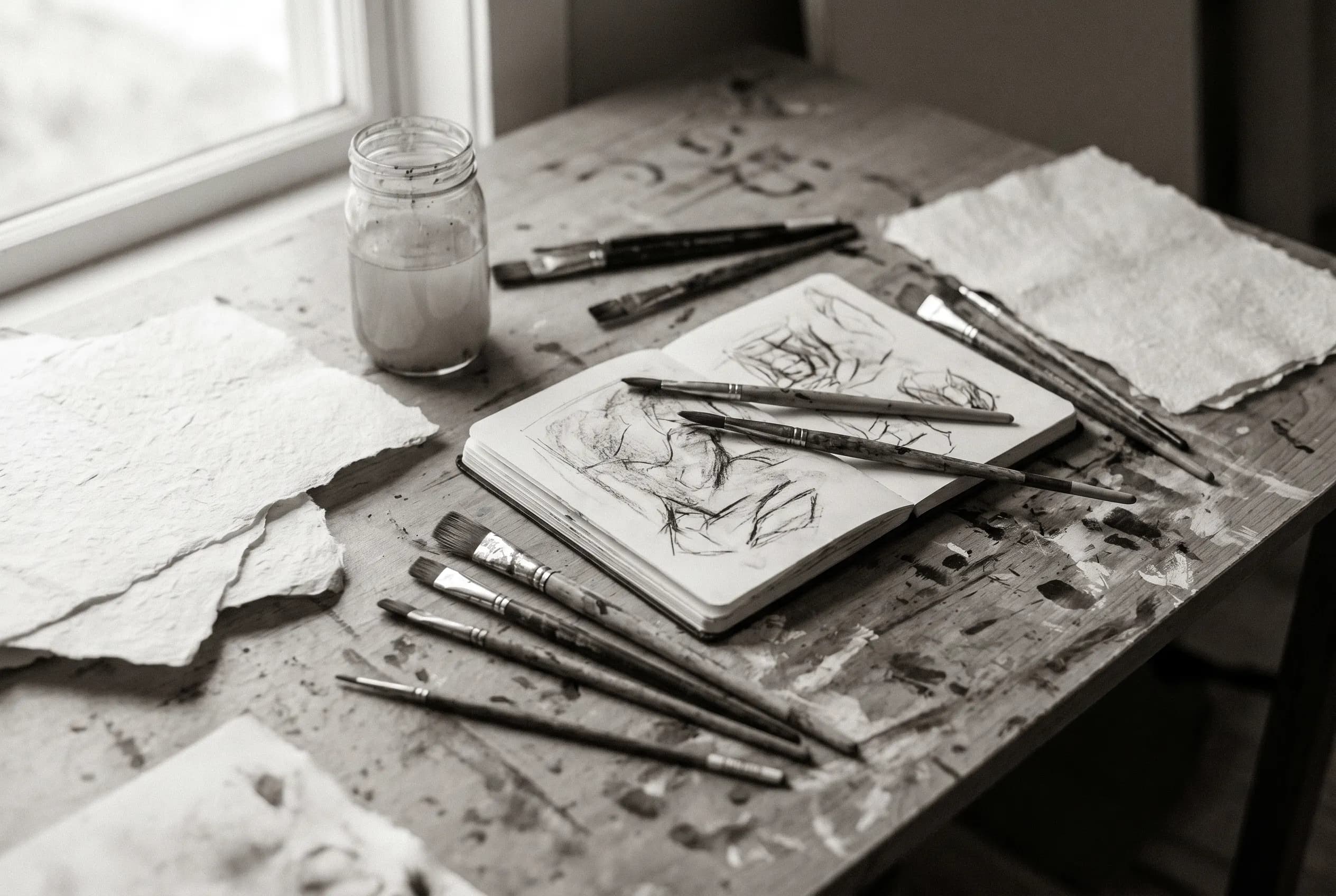
Complex emotions sometimes need more than words. Art psychotherapy combines talking therapy with creative expression, following a doing, thinking and feeling approach. It offers a different medium to explore what you are going through, which can be especially helpful for anyone who finds feelings hard to put into words.
At The Mind Faculty, art psychotherapy is led by Reena Clare, who works with people on issues such as grief, anger, trauma, life with dementia and supporting children with special needs.
A different language for difficult feelings
Art can give a voice to experiences that are hard to talk about, or that we do not yet fully understand. For some people, making something feels safer than speaking. This is particularly true with trauma. One approach, Children's Accelerated Trauma Treatment (CATT), uses arts-based methods to support recovery from the symptoms of PTSD, such as flashbacks, nightmares and anxiety.
A common worry is that art therapy is only for children, or only for people who can draw. It isn't. Age and artistic ability are not barriers. Most people find that once they have experienced a session, that concern falls away.
Try it yourself: an art journal
A simple way to bring some of this into your own life is to keep an art journal. Anyone can start one.
- Use a plain sketchbook with no lines, in whatever size you will actually carry.
- Date your entries, and avoid tearing out pages. If you are unhappy with one, simply cross it out.
- Doodle, draw, paste in images, write or scribble. There are no rules and no restrictions.
- Use symbols for anything that feels too personal to spell out.
- Let go of any pressure to fill the page or make it look "nice". Just let it flow.
If you would like to explore art therapy with a qualified art psychotherapist, we are here when you are ready.
If any of this rings true, it's worth a conversation.